L'UMR-S 1144  change de nom en 2025 à l'occasion du nouveau contrat quinquennal (2025-2029) et devient "Optimisation Thérapeutique en Neuropharmacologie". Elle est située à la Faculté de Pharmacie de Paris (75006).


Organisée en quatre équipes, l'UMR-S 1144 est membre de la Fondation FondaMental.


Lithium is the first-line mood stabilizer for the treatment of patients with bipolar disorder. However, its mechanisms of action and transport across the blood-brain barrier remain poorly understood. The contribution of lithium-7 magnetic resonance imaging (7Li MRI) to investigate brain lithium distribution remains limited because of the modest sensitivity of the lithium nucleus and the expected low bra...


Lire la suite


0 Réaction

Opioids are widely used in pain management whose effects are due to binding to classical opioid receptors and/or Toll-like receptors (TLR) present at the central nervous system (CNS). At the blood-brain barrier (BBB), several influx and/or efflux transporters are expressed, such as the ATP-binding cassette (ABC) P-glycoprotein (P-gp, ABCB1), Breast Cancer Resistance Protein (BCRP, ABCG2) and multidrug resistance-asso...

Lire la suite


0 Réaction

OBJECTIVE: To identify risk factors for suicide attempts (SA) in individuals commencing treatment for a manic or mixed episode. METHOD: A total of 3390 manic or mixed cases with bipolar disorder (BD) type I recruited from 14 European countries were included in a prospective, 2-year observational study. Poisson regression models were used to identify individual and treatment factors associated with ...

Lire la suite


0 Réaction

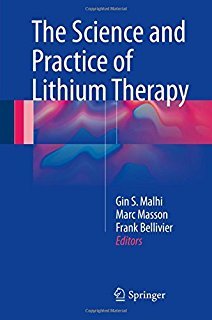
The Science and Practice of Lithium Therapy by Gin S Mahli, Marc Masson, Frank Bellivier (Eds). Springer, 2017. ▶ Evidence-based guide to the clinical prescription of lithium ▶ Explains mechanisms of action and their significance ▶ Discusses indications, side effects, and monitoring ▶ Addresses the myths and concerns regarding lithium use This book prov...

Lire la suite


0 Réaction

Drugs able to treat both nociceptive and neuropathic pain effectively without major side effects are lacking. We developed a bifunctional peptide-based hybrid (KGNOP1) that structurally combines a mu-opioid receptor agonist (KGOP1) with antinociceptive activity and a weak nociceptin receptor antagonist (KGNOP3) with anti-neuropathic pain activity. We investigated KGNOP1-related b...

Lire la suite


0 Réaction

OBJECTIVES: We examine if the lithium response is associated with changes in core clock genes expressions. METHODS: The effect of a therapeutic concentration of lithium (1mM) on the expression levels of 17 circadian genes, was examined in lymphoblastoid cell lines (LCLs) derived from two well-characterized groups of BD patients, defined as lithium non-responders (NR, n = 20) or exce...

Lire la suite


0 Réaction